Ramp Gradient Transition Calculator
Check the changes between three consecutive ramp or driveway segments. Enter each gradient in one consistent direction, from approach through ramp to departure. Positive means rising and negative means falling in that direction.
The result identifies the physical sag or summit at each junction and tests the transition thresholds in Auckland Unitary Plan E27.6.4.4(2). It does not determine full ramp compliance or design a transition section.
Worked example: An approach of 0%, a ramp of +14%, and departure of 0% creates a 14% sag change followed by a 14% summit change. The summit exceeds its 12.5% threshold, while the sag is below its 15% threshold. Reversing the ramp to -14% reverses the junction types.
Check vehicle clearance, maximum access gradients, road platforms and other applicable standards separately. Use the AUP source link in the calculator to review the full requirement.
Auckland Unitary Plan · Source diagrams
Why ramp transitions matter
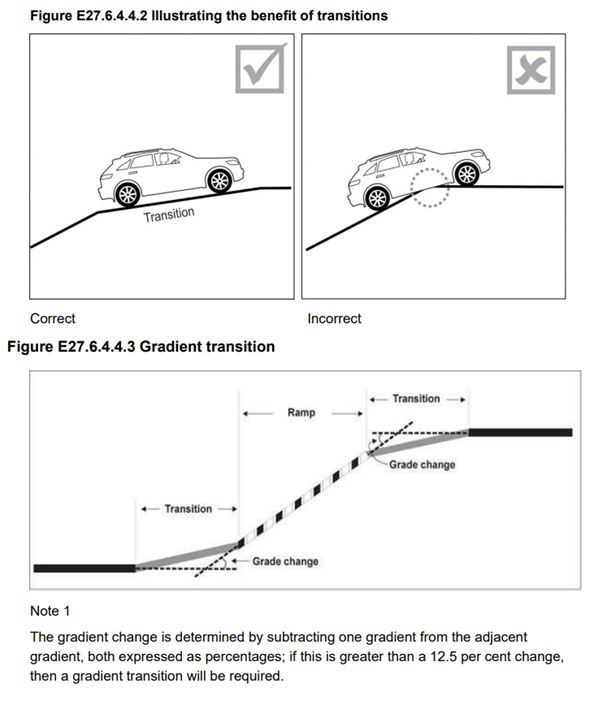
The diagrams below show how transition sections soften changes in gradient and help prevent a vehicle’s underside from striking the ground. Read them alongside E27.6.4.4(2), which sets the separate sag and summit requirements assessed by the calculator.
Source: Auckland Council, Auckland Unitary Plan (Operative in Part), E27 Transport. Figures E27.6.4.4.2 and E27.6.4.4.3, pages 46–47 (July 2026 edition).