
All About Minor Dwellings in Auckland
What the New NES-DMRU means for Minor Dwellings in Auckland
In Auckland, minor dwellings, also known as ‘granny flats’, have always played an essential role in providing flexible housing options for Auckland landowners to help them utilise their land better.
However, as of December 2025, the Government introduced the National Environmental Standards for Detached Minor Residential Units (NES-DMRU), which took effect on 15 January 2026. These national rules create a permitted pathway for building small, detached minor dwellings across New Zealand — including Auckland.
This marks a significant shift from the previous Auckland Unitary Plan-based framework. Thus, if you are considering building a minor dwelling, understanding how the NES-DMRU applies to your property is essential. However, not all cases are created equal!
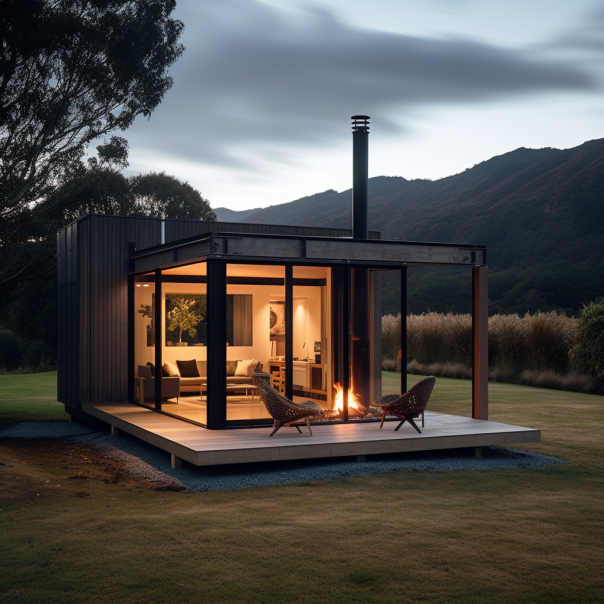
So, what is a Detached Minor Residential Unit?
Simply put, a detached minor residential unit is a small, self-contained second home that you can build on your property. As the name itself suggests, it must be detached from the principal dwelling, remain in common ownership, and its size must not exceed 70m² in the internal floor area. “Self-contained” means it includes its own kitchen, bathroom and sleeping facilities. While the national standard now provides a more precise and nationally consistent pathway, there are other requirements as well, which can vary by zone. Keep in mind that the NES-DMRU applies only to detached minor residential units.
Detached minor residential units are a great solution to housing needs in Auckland. They let homeowners make the most of their property space.
In which zone does the NES-DMRU apply?
Under the NES-DMRU zoning still matters, but only in the following zones:
· Māori purpose zone;
· Mixed-use zone;
· Residential zone;
· Rural zone.
What are the Permitted Activity standards for the NES-DMRU?
These are referred to as regulations, but essentially they are rules. If your site is located within any of the zones listed above, the NES-DMRU rules apply:
1. Floor Area
A floor area that is equal to or less than 70m²
2. Building Coverage for the site
Must be no more than a maximum of 50% in residential zones, while in the Rural Zone, Māori Purpose Zone, and Mixed-Use Zones it must comply with the district/unitaryplan requirements.
3. Setback from the principal residential unit
The DMRU must be set back no less than 2mfrom the principal residential unit.
4. Setback from boundary
Residential zone: be set back no less than 2m from the front, side, and rear boundaries of the site
Rural zone: be set back no less than 10mfrom the front boundary and 5mfrom the side and rear boundaries of the site
Māori Purpose Zone: comply with the site setback requirements in the district plan
Mixed-Use Zone: comply with the site setback requirements in the district plan
What has changed under the NES-DMRU?
Previously, whether you could build a minor dwelling in Auckland was primarily controlled by zoning.
The NES-DMRU now overrides the district plan rules in cases of conflict. In practical terms, if your project complies with the national environmental standards, you might not need a resource consent even if the Auckland Unitary Plan would have required one in the past.
Consequently, this change reduces uncertainty and lowers consenting costs; however, it does not remove all planning considerations.
How the NES-DMRU applies in Auckland?
As mentioned above, the new standard applies across Residential, Rural, Mixed-Use and Māori-Purpose zones. In Auckland, this includes most residential zones such as Single House, Mixed Housing Suburban, Mixed Housing Urban, Terrace Housing and Apartment zones.
Nevertheless, the Auckland Unitary Plan (AUP) still applies, but it no longer controls minor dwellings in the same way. Overlay controls remain relevant and can still trigger consent that commonly includes coastal inundation areas, floodplains, notable trees, significant ecological areas, heritage overlays and infrastructure constraints.
In practice, this means the main planning risk in Auckland is often not the base zoning, but overlays and infrastructure constraints. Therefore, this is where site-specific assessment becomes critical, and is a service we offer.
Do you still need Resource Consent?
If your proposal fully complies with the NES-DMRU standards and no overlays apply, resource consent may not be required.
However, consent may still be triggered if:
The dwelling exceeds 70m²
Setbacks are infringed
Overlay controls apply
Earthworks exceed permitted thresholds
Infrastructure servicing is constrained
Other regional planning rules apply
Importantly, the NES-DMRU only relates to resource consents. Building consent may be required under the Building Act, though exemptions could apply.
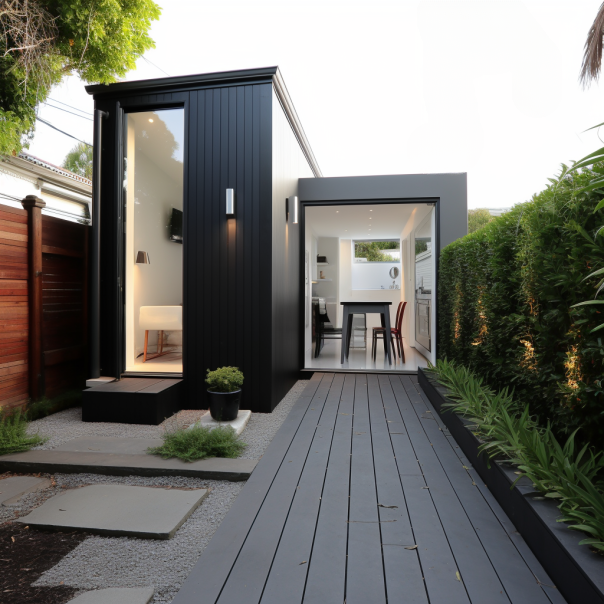
Subdivision around a minor dwelling
The NES-DMRU does not automatically allow subdivision. Minor dwellings must stay under the common ownership of the principal residence unless a separate subdivision is approved under the Auckland Unitary Plan. Subdivision in Auckland is still a very complicated, highly site-specific matter, especially in areas with minimum lot sizes or infrastructure limitations.
Therefore, if subdivision is part of your long-term strategy, this should be assessed early to avoid disappointment.
Costs and Potential Risks
Based on our review of online sources, construction costs for minor dwellings in Auckland typically start at around $210,000, depending on design complexity, materials, servicing, and site conditions. While the new national rules reduce planning uncertainty, risks still exist. As noted above, these often relate to overlays, infrastructure capacity, site coverage limits, or assumptions that a proposal is permitted when it is not.
Therefore, to avoid unnecessary delays, a short upfront feasibility review can often prevent significantly higher costs later.
Why Professional Advice Still Matters
Although the NES-DMRU simplifies the baseline rules, it is our experience that Auckland properties are affected by various constraints.
We regularly see projects delayed or redesigned due to:
Flood hazard overlays
Slope instability
Notable trees
Infrastructure limitations
Incorrect assumptions about permitted activity status
Whilst the new standard creates opportunity, careful assessment remains essential to ensure compliance and to avoid risk.
Frequently Asked Questions
What is a Detached Minor Dwelling?
It is a detached, self-contained secondary dwelling on the same site as the principal dwelling, limited to 70m² and held in common ownership.
What are the rules for minor dwellings in Auckland?
In the past, the option to build a minor dwelling in Auckland depended heavily on the underlying zone and the possibility of additional dwellings being allowed under the Auckland Unitary Plan. This situation has changed now that the National Environmental Standards for Detached Minor Residential Units (NES-DMRU) have been introduced. The NES-DMRU provides a nationally consistent permitted pathway for one detached minor residential unit in Residential, Rural, Mixed-Use and Māori Purpose zones, provided specific standards are met.
In Auckland, this means that if your proposal complies with the NES-DMRU requirements, including the 70m² maximum floor area, separation distance and setback standards, resource consent may not be required. However, Auckland Unitary Plan overlays and servicing constraints can still trigger consent.
Do I need consent to build a minor dwelling?
Whether you need consent to build a minor dwelling depends on several factors, including the zone your property is in, the size and location of your minor dwelling, and other requirements. However, if your proposal complies with all NES-DMRU standards and no Auckland Unitary Plan overlays apply resource consent may not be required. Building consent may still be required under the Building Act, although some granny flats may qualify for building consent exemptions if specific criteria are met.
How much does a minor dwelling cost in NZ?
The cost of constructing a detached minor residential unit in Auckland, New Zealand, can be influenced by several factors, including council consents, materials used, labour costs, site conditions, and service connections. The building costs generally start at around $210,000 but may be much higher.

Summing Up
The introduction of the NES-DMRU has simplified and made the process of minor dwellings in Auckland more straightforward, and attempted to introduce nationally consistent rules.
For many homeowners, it removes a layer of complexity that previously existed under the Auckland Unitary Plan. However, whether a minor dwelling project will be successful still depends on understanding how national standards interact with local overlays, infrastructure needs, and other factors.
If you are considering building a granny flat or detached minor dwelling, we advise you to get a professional and customised planning consultation before going ahead with the design or construction. CoLab Planning is equipped to help you navigate the regulations and give you greater certainty to move forward with your project.